Computer forensics is increasingly vital as digital data expands and cyber threats rise, demanding skilled investigation for legal and security purposes.
What is Computer Forensics?
Computer forensics, also known as digital forensics, is a branch of forensic science focused on the recovery and investigation of the material found in digital devices. This encompasses a wide range of devices, from standard computers and smartphones to network servers and cloud storage. The core goal is to identify, preserve, analyze, and present digital evidence in a manner that is legally admissible in court.
It involves investigating computer-related crimes, such as fraud, data breaches, and cyberattacks, to obtain evidence for legal proceedings. Online forensics specifically targets these crimes, aiming to gather proof suitable for presentation in a court of law. As enterprises grapple with growing digital data volumes and sophisticated cyber threats, the need for skilled forensic investigators is paramount.
The Growing Importance of Digital Forensics in 2026
In 2026, digital forensics is experiencing heightened importance due to the escalating frequency and sophistication of cybercrimes. The Centre in India is actively preparing a detailed roadmap, including training initiatives, to combat this growing menace. Enterprises face increasing risks from data breaches and fraudulent activities perpetrated by cyber attackers infiltrating their systems.

This necessitates robust forensic capabilities to investigate incidents, mitigate damage, and ensure legal compliance. The demand for professionals skilled in seizing, preserving, and analyzing digital evidence is surging. Furthermore, proactive measures, like those being implemented in India, highlight a global recognition of the critical role digital forensics plays in national security and economic stability. The need is now, and will continue to grow.

Core Principles of Computer Forensics
Fundamental principles guide investigations: preserving evidence integrity, maintaining a strict chain of custody, and ensuring evidence admissibility within legal frameworks.
Preservation of Evidence
Preservation is paramount in computer forensics. The initial response to a potential incident must prioritize securing digital evidence to prevent alteration or destruction. This involves immediately isolating the affected systems – disconnecting them from networks to avoid remote modification.
Creating a forensic image, a bit-for-bit copy of the storage device, is crucial. This ensures analysis is performed on the copy, leaving the original evidence untouched. Proper documentation of all actions taken, including dates, times, and personnel involved, is essential.
Maintaining a pristine state of evidence is vital for its legal acceptance. Any deviation from established protocols can jeopardize the entire investigation, rendering collected data inadmissible in court. Strict adherence to best practices guarantees the integrity of the findings.
Chain of Custody
Maintaining a meticulous chain of custody is fundamental to the admissibility of digital evidence. This detailed record documents every individual who handled the evidence, from initial seizure to presentation in court. Each transfer must be logged, including date, time, and purpose.
A complete chain of custody demonstrates the integrity of the evidence, proving it hasn’t been tampered with or compromised. Any break in the chain raises doubts about its authenticity and can lead to its exclusion from legal proceedings.
Secure storage and controlled access are vital components. Evidence should be stored in tamper-evident containers, and access limited to authorized personnel only. Thorough documentation and adherence to protocol are non-negotiable.
Admissibility of Evidence in Court
Ensuring digital evidence is admissible in court requires strict adherence to legal standards and forensic best practices. Evidence must be relevant, authentic, and demonstrate a clear chain of custody. Courts scrutinize the methods used for collection, preservation, and analysis.
Proper documentation is paramount, detailing every step taken to maintain the evidence’s integrity. Expert testimony often clarifies complex technical aspects for the judge and jury. Failure to meet these standards can result in evidence being deemed inadmissible, potentially jeopardizing a case.
Understanding rules regarding search warrants and data privacy is crucial for legally obtaining and presenting digital evidence.

Key Stages in a Computer Forensics Investigation
Investigations involve identification, evidence collection, thorough examination, and analysis – crucial steps to uncover digital crimes and present findings effectively.

Identification
The initial identification phase is paramount in any computer forensics investigation. This stage involves recognizing potential sources of evidence, which can range from compromised computer systems and network devices to digital storage media like hard drives and USB drives. Determining the scope of the incident is also critical; understanding what systems were affected and the nature of the potential crime – be it fraud, data breach, or cyberattack – guides subsequent steps.
Furthermore, identifying key personnel involved, such as system administrators or potential witnesses, is essential for gathering crucial information. This preliminary assessment helps define the investigation’s objectives and ensures resources are allocated effectively. Accurate identification lays the groundwork for a successful and legally sound forensic process.
Collection and Acquisition of Evidence
Following identification, the meticulous collection and acquisition of evidence begins. This phase demands strict adherence to established protocols to maintain the integrity of the data. Utilizing forensically sound methods, such as creating bit-by-bit disk images, ensures no original data is altered. These images serve as exact copies for analysis, preserving the original evidence in its pristine state.
Proper documentation throughout this process is crucial, detailing every step taken, including the date, time, and personnel involved. Maintaining a detailed chain of custody – a chronological record of evidence handling – is vital for admissibility in court. Secure storage of acquired evidence, protecting it from unauthorized access or modification, is also paramount.
Examination and Analysis
The examination and analysis phase involves a deep dive into the acquired digital evidence. Forensic tools, like EnCase and FTK Imager, are employed to systematically search, extract, and interpret data. This includes recovering deleted files, analyzing metadata, and identifying relevant artifacts that may shed light on the incident.
Data carving techniques are utilized to reconstruct fragmented files, while network forensics tools, such as Wireshark, analyze network traffic for malicious activity. Investigators meticulously correlate findings, building a timeline of events and establishing connections between different pieces of evidence. The goal is to uncover facts relevant to the investigation, ultimately providing a clear and concise report of the findings.
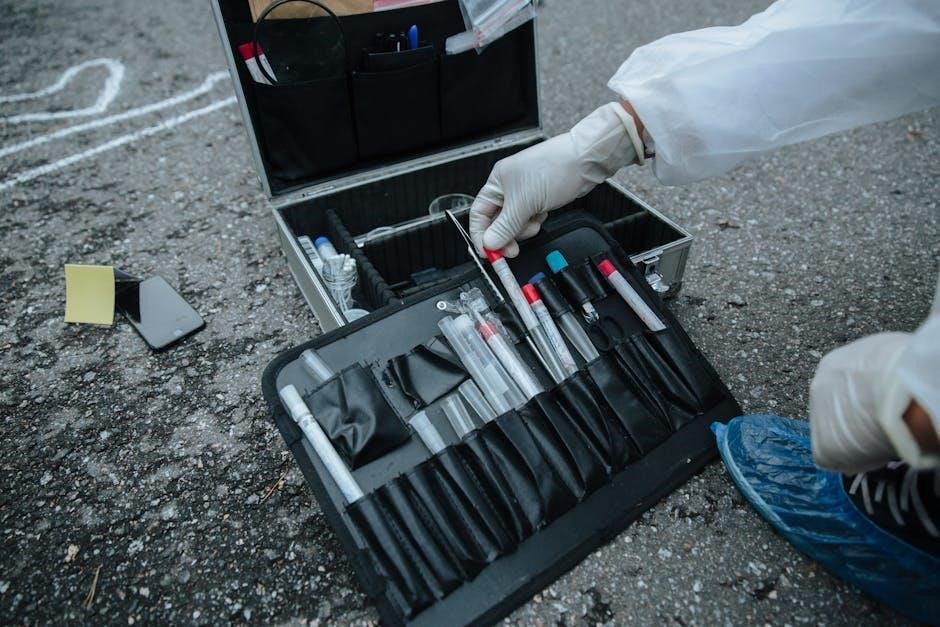
Essential Tools and Techniques
Forensic investigations rely on specialized tools like disk imagers (EnCase, FTK Imager), data carving, and network analysis with Wireshark for effective results.
Disk Imaging Tools (e.g., EnCase, FTK Imager)
Disk imaging tools are foundational in computer forensics, creating exact copies of storage devices – crucial for preserving original evidence. EnCase and FTK Imager are industry standards, enabling bit-by-bit duplication, ensuring no data alteration during analysis. These tools facilitate investigations without modifying the source drive, maintaining its integrity for court admissibility.
FTK Imager is often favored for its free availability and efficient imaging capabilities, while EnCase provides a more comprehensive, albeit costly, suite of forensic features. Both support various file systems and imaging formats (e.g., E01, DD). Proper use of these tools, alongside validated hashing algorithms, guarantees the authenticity and reliability of the digital evidence presented.
Data Carving Techniques
Data carving recovers files from unallocated disk space or damaged storage media when traditional file system metadata is unavailable. This technique relies on identifying file headers, footers, and data structures within the raw data stream. It’s essential when dealing with fragmented or intentionally deleted files, often encountered in cybercrime investigations.
Forensic investigators utilize specialized tools to scan storage devices for these signatures, reconstructing files based on their inherent characteristics. While effective, data carving can be time-consuming and may yield incomplete or corrupted files. Success depends on the file type, fragmentation level, and the presence of overlapping signatures. Careful validation is crucial to ensure recovered data’s integrity and relevance.
Network Forensics Tools (e.g., Wireshark)
Network forensics examines network traffic to identify security incidents, track attacker movements, and recover evidence of malicious activity. Tools like Wireshark are indispensable, capturing and analyzing network packets in real-time or from saved capture files (PCAP). Investigators can dissect protocols, filter traffic based on specific criteria, and reconstruct communication sessions.
Analyzing network logs, intrusion detection system (IDS) alerts, and firewall logs complements packet capture. These tools help pinpoint the source and destination of attacks, identify compromised systems, and understand the scope of a breach. Effective network forensics requires a strong understanding of networking protocols and security principles, alongside proficiency in utilizing these specialized analytical tools.

Types of Digital Evidence
Digital evidence encompasses hard drives, RAM contents, and crucial log files, all providing valuable insights into computer-related crimes and security breaches.
Hard Drive Data
Hard drive data remains a cornerstone of most computer forensics investigations. It often contains a wealth of information, including deleted files, user activity, and system configurations. Extracting this data requires specialized tools and techniques, such as disk imaging, which creates a bit-for-bit copy of the drive for analysis.
Forensic investigators meticulously examine these images, employing data carving methods to recover fragmented or erased files. Analyzing file system metadata, timestamps, and file signatures helps reconstruct events and establish timelines. The sheer volume of data on modern hard drives necessitates efficient search and filtering capabilities to pinpoint relevant evidence. Properly handling and documenting hard drive evidence is crucial for maintaining its integrity and admissibility in court.
RAM Analysis
RAM (Random Access Memory) analysis provides a snapshot of a computer’s volatile data – information actively being used by the system at a specific moment. Unlike hard drives, RAM loses its data when power is removed, making timely acquisition critical. Forensic tools capture a memory dump, preserving this fleeting evidence.

Analyzing RAM can reveal running processes, network connections, decrypted files, and even malware that hasn’t yet written itself to disk. This is invaluable for identifying rootkits or understanding the immediate actions of an attacker. However, RAM analysis is complex, requiring expertise to interpret the raw data and correlate it with other evidence sources. It offers unique insights into system behavior unavailable through traditional disk forensics.
Log Files and Event Data
Log files and event data are crucial components of digital investigations, offering a chronological record of system activities. Operating systems, applications, and network devices all generate logs detailing user actions, errors, and security events. These records can reveal critical information about intrusions, data access, and system modifications.
Forensic analysts meticulously examine log files, correlating events across multiple sources to reconstruct timelines and identify suspicious patterns. Analyzing timestamps, user IDs, and event descriptions helps establish what happened, when, and by whom. Properly preserved logs are invaluable for establishing a chain of events and supporting legal claims. However, log data can be voluminous and require specialized tools for efficient analysis and interpretation.

Legal and Ethical Considerations
Forensic investigations demand strict adherence to legal protocols, including obtaining valid search warrants and respecting privacy laws regarding data protection.
Search Warrants and Legal Authority
Digital forensic investigations frequently necessitate obtaining search warrants to legally seize and examine digital evidence. These warrants must demonstrate probable cause, specifically detailing the suspected criminal activity and the locations where evidence might be found.
Investigators must meticulously adhere to the warrant’s scope, limiting their search to the specified data and devices. Failure to do so can lead to evidence being deemed inadmissible in court.
Understanding relevant legislation, such as data protection laws and privacy regulations, is crucial. Legal authority isn’t solely about warrants; it also encompasses compliance with applicable laws governing data access and handling throughout the investigation process. Proper documentation of the legal basis for each action is paramount.
Privacy Concerns and Data Protection Laws
Digital forensics must navigate a complex landscape of privacy concerns and data protection laws. Investigations often involve accessing personal information, requiring strict adherence to regulations like GDPR, CCPA, and other regional privacy statutes.
Investigators must minimize the collection of irrelevant personal data and implement robust security measures to protect the confidentiality of acquired information. Transparency is key; individuals may have rights regarding access to, or deletion of, their data.
Balancing the need for evidence with individual privacy rights is a constant challenge. Legal counsel should be involved to ensure compliance and mitigate potential legal repercussions related to data breaches or unlawful access.
