Pinewood Derby Axle Guide: A Comprehensive Overview
Pinewood Derby racing hinges on minimizing friction, with axle preparation being paramount for speed; graphite lubrication and polishing kits are essential tools.
Engineers utilized scientific principles to optimize car design, while two-land axles can enhance wheel stability, though regulations often prohibit oil-based lubricants.
Understanding Pinewood Derby Axles
Pinewood Derby axles are deceptively simple components, yet they profoundly impact a car’s performance. Typically, these axles are made of metal, often steel, and are provided as part of the official kit. However, understanding their inherent characteristics is crucial for success. The initial axles often contain imperfections – burrs, bends, or inconsistencies in diameter – that dramatically increase friction.
These imperfections prevent a smooth, straight roll, robbing the car of valuable speed. The axle head, the portion that connects to the wheel, also plays a role; modifications to this area can influence alignment and reduce rubbing. Furthermore, the interaction between the axle and the wheel bore is critical; a tight fit isn’t always ideal, as it can create binding and increase friction. Careful preparation and selection are key.
Axle Materials and Types
Pinewood Derby axles predominantly come in two material types: steel and, less commonly, aluminum. Official kits generally supply steel axles due to their durability and affordability. However, the quality of steel can vary, impacting its susceptibility to bending and corrosion. Aftermarket axles often boast higher-grade steel alloys, promising increased straightness and reduced imperfections.
Aluminum axles, while lighter, are generally avoided in competitive racing due to their softness and tendency to bend under stress. Axle diameter is another key consideration; standard sizes are typically 0.095 inches, but slight variations can occur. The “lands” – the raised portions on the axle – influence how the axle interacts with the wheel bore, impacting stability and friction. Understanding these material properties is vital for informed selection.
Official Axles vs. Aftermarket Axles
Official Pinewood Derby axles, included in the standard kit, offer a baseline for participation but often require significant preparation. They are typically made of a lower-grade steel, prone to bends and imperfections that increase friction. This necessitates meticulous polishing and straightening to achieve optimal performance.
Aftermarket axles, conversely, are engineered for speed. They utilize higher-quality steel alloys, resulting in greater straightness and reduced runout. These axles often feature precision grinding and polishing, minimizing the need for extensive work. While more expensive, they can provide a competitive edge. The choice depends on budget and dedication to preparation; official axles demand more effort, while aftermarket options offer a performance boost.

Preparing Your Axles for Maximum Speed
Axle preparation is crucial; polishing removes imperfections, deburring eliminates snags, and ensuring straightness guarantees a true roll for minimized friction and enhanced velocity.
Axle Polishing Techniques
Axle polishing is a cornerstone of Pinewood Derby preparation, directly impacting a car’s speed by reducing rotational friction. The goal isn’t merely smoothness, but a mirror-like finish. Begin with progressively finer grits of sandpaper, starting around 400 and moving up to 2000, ensuring complete coverage and removing any initial imperfections.
Following sanding, utilize a polishing compound – often found in dedicated axle polishing kits – applied with a polishing wheel or cloth. Rotate the axle consistently, applying moderate pressure. Buffing compounds containing aluminum oxide are effective. Inspect frequently; a truly polished axle will exhibit a reflective surface, minimizing contact points and maximizing potential speed. Remember to clean the axle thoroughly after each polishing stage to prevent contamination.
Deburring Axles: Removing Imperfections
Axle deburring is a critical step often overlooked, yet profoundly impactful on Pinewood Derby performance. Out-of-the-package axles frequently possess microscopic burrs – tiny metal fragments – resulting from the manufacturing process. These imperfections create significant friction points as the axle rotates within the wheel bore.
Employ a deburring tool, a small file, or even very fine sandpaper to carefully remove these burrs. Focus on the axle head, the shoulder, and the entire length. Pay particular attention to the transition areas where the diameter changes. A magnifying glass is invaluable for identifying subtle imperfections. Smoothness is key; eliminate any sharp edges or raised areas. Thorough deburring ensures a consistent, low-friction roll, contributing significantly to overall speed.

Axle Straightness: Ensuring True Roll
Axle straightness is absolutely fundamental to a fast Pinewood Derby car. Even a slight bend in an axle introduces unwanted friction and causes the wheel to wobble, dramatically reducing speed. A seemingly minor imperfection can translate into significant drag along the track.
To test axle straightness, roll each axle on a perfectly flat surface – glass or polished metal are ideal. Observe carefully for any wobble or deviation from a straight line. If an axle is bent, gentle straightening is possible, but proceed with extreme caution to avoid weakening the metal. Replacement is often the safer option. Ensuring perfectly straight axles guarantees a true roll, minimizing friction and maximizing potential velocity.

Minimizing Friction: The Key to Victory
Friction is the primary obstacle in Pinewood Derby racing; reducing it through polishing, lubrication, and precise alignment unlocks maximum speed and competitive advantage.
The Role of Friction in Pinewood Derby Racing
Friction fundamentally dictates performance in Pinewood Derby competitions, acting as the principal force opposing motion. It manifests at every contact point – wheel against track, wheel bore against axle, and even within the wheel itself due to imperfections. Understanding these sources is crucial.
Imperfections in both wheels and axles create significant frictional resistance. Even microscopic burrs or uneven surfaces dramatically increase drag, slowing the car. The coefficient of friction between materials also plays a vital role; minimizing this value is a core objective.
Furthermore, side friction, caused by misalignment or wobble, steals energy and reduces speed. Controlling and minimizing all forms of friction – rolling, sliding, and side friction – is the key to achieving a winning time. Careful preparation and lubrication are essential to overcome these forces.
Graphite Lubrication: Application and Best Practices
Graphite is overwhelmingly recommended as the premier lubricant for Pinewood Derby cars, due to its low friction coefficient and adherence to surfaces. However, proper application is critical for maximizing its benefits. Avoid excessive amounts, as buildup can actually increase drag; A light, even coating is ideal.
The best practice involves applying graphite to the wheel bores and axles, then “working” it in by spinning the wheels repeatedly. This distributes the lubricant and polishes the surfaces simultaneously. Multiple thin coats are superior to one thick application.
Remember that official rules typically prohibit oil-based lubricants. Graphite provides a dry, compliant alternative. Ensure complete coverage of the contact areas, but avoid getting graphite on the track itself. Consistent application across all wheels is vital for a straight, fast run.
Dry Lubricants vs. Wet Lubricants
The debate between dry and wet lubricants in Pinewood Derby racing is largely settled: dry lubricants, specifically graphite, are overwhelmingly favored and often mandated by official rules. Regulations explicitly prohibit lubricating oils, highlighting their detrimental effects on speed.
Wet lubricants, while initially reducing friction, tend to attract dust and debris, creating a gummy residue that significantly increases drag. This residue also spreads onto the track, potentially affecting other racers. Graphite, being a dry powder, minimizes these issues.
Dry lubricants adhere to the axle and wheel bore, providing a consistent layer of low-friction material. Proper application, as described previously, is key. The choice isn’t simply about presence or absence of liquid; it’s about maintaining a clean, consistent, and rule-compliant lubrication system.
Wheel Alignment and Axle Positioning
Precise wheel bore alignment and consistent axle insertion depth are crucial for straight tracking and minimal friction, impacting overall Pinewood Derby performance.
Wheel Bore Alignment Considerations
Wheel bore alignment is a critical, often overlooked, aspect of Pinewood Derby car preparation. Imperfectly aligned bores introduce significant friction, robbing your car of valuable speed. Ideally, the wheel bore should be perfectly perpendicular to the wheel’s rolling surface. However, manufacturing tolerances often result in slight misalignments.
These misalignments can cause the wheel to “toe-in” or “toe-out,” creating sideways forces as the car rolls down the track. Addressing this requires careful inspection and, potentially, bore alignment tools. Some builders slightly enlarge the bore to allow for minor adjustments during axle insertion, effectively “steering” the wheel into proper alignment. Remember, even small corrections can dramatically reduce friction and improve performance. Consistent alignment across all four wheels is paramount for a straight and fast run.
Axle Insertion Depth and Consistency
Axle insertion depth significantly impacts Pinewood Derby car performance, influencing weight distribution and minimizing friction. Consistent depth across all axles is crucial for a straight-running vehicle. Deeper insertion generally shifts weight rearward, potentially improving speed, but can also increase binding if not carefully managed.
A common technique involves inserting the axle until a specific portion of the axle head remains visible. Utilizing a precise method, like a marked block or digital calipers, ensures uniformity. Avoid forcing axles, as this can bend them or damage the wood. The goal is a snug, but free-rolling fit. Inconsistent depth creates uneven drag, causing the car to veer off course. Careful attention to this detail can unlock substantial gains in speed and stability.
Understanding Axle Tilt and Cant
Axle tilt and cant, often subtle adjustments, are advanced techniques used to optimize Pinewood Derby car performance by influencing wheel alignment and reducing friction. “Tilt” refers to angling the axle head slightly inward or outward, while “cant” describes a similar adjustment along the axle’s length.
These adjustments aim to counteract imperfections in wheel bores and track conditions. A slight inward tilt can help guide the car straight, while cant can minimize wheel wobble. However, excessive tilt or cant introduces unwanted drag. Precise measurement and careful experimentation are vital. Achieving the correct angle requires patience and a keen eye for detail. It’s a delicate balance between minimizing friction and maintaining stability, potentially yielding significant speed improvements.

Advanced Axle Techniques
Modifying axle heads and strategically using washers can refine performance; two-land axles offer stability, but check rules, as they aren’t always permitted.
Axle Head Modification
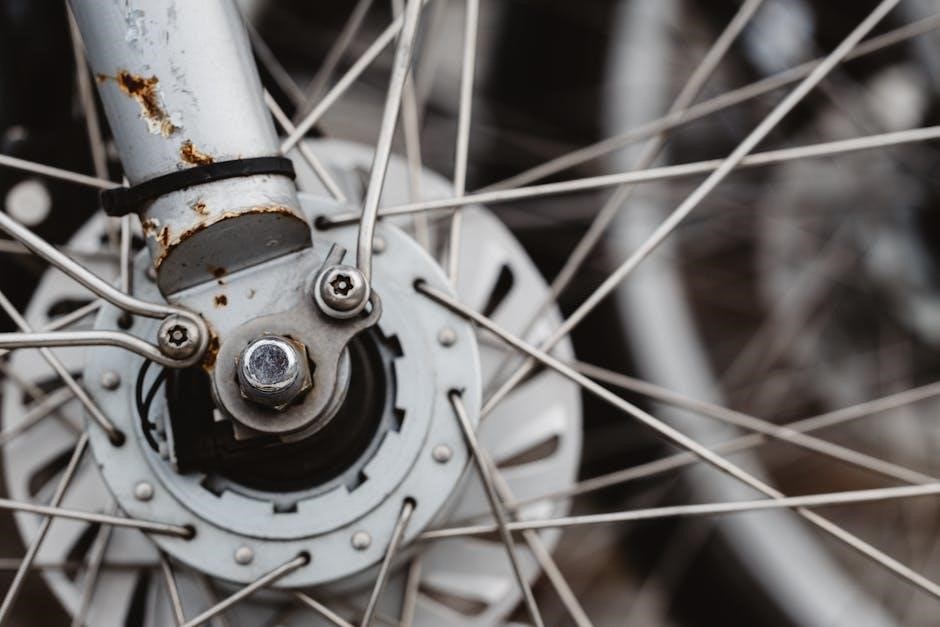
Axle head modification is an advanced technique aimed at reducing friction and optimizing wheel alignment. The goal isn’t necessarily to drastically alter the head’s shape, but rather to ensure a smooth, consistent contact point with the wheel bore. Imperfections on the axle head can create friction hotspots, hindering performance.
Careful filing or polishing can remove these imperfections, creating a more uniform surface. However, it’s crucial to maintain the original axle head diameter, as significant changes may violate competition rules. Some builders slightly round the edges of the axle head to promote smoother wheel entry and exit.
The key is subtlety and precision; aggressive modification can introduce new problems. Always prioritize maintaining axle straightness during any modification process. Remember to thoroughly clean the axle after modification to remove any metal filings or polishing compounds before lubrication.
Using Axle Washers Effectively
Axle washers, often made of plastic or metal, serve several purposes in Pinewood Derby car construction. Primarily, they act as spacers, controlling the precise distance between the wheel and the car body, influencing alignment and reducing rubbing. Using washers allows for fine-tuning of axle positioning, crucial for minimizing friction.
However, improper washer use can increase friction. Ensure washers are perfectly flat and free of burrs. Multiple washers stacked together can introduce instability; a single, well-placed washer is often preferable. Consider the washer material – some materials create more friction than others.
Experimentation is key. Different washer configurations can affect car performance, so testing is vital. Always adhere to competition rules regarding washer size and material. Properly utilized, washers are a powerful tool for optimizing speed and handling.
Two-Land Axles: Pros and Cons
Two-land axles refer to axles machined with two distinct raised sections, or “lands,” instead of a single smooth diameter. The intention is to create a more stable rolling surface within the wheel bore, potentially reducing wobble and improving straight-line speed in Pinewood Derby cars.
The primary pro is enhanced stability, particularly if the wheel bore isn’t perfectly concentric. However, two-land axles introduce complexity. Precise machining is critical; imperfections can increase friction. They also require careful wheel bore preparation to ensure a proper fit.
A significant con is that many competition rules explicitly prohibit or restrict modifications to the official axles, making two-land axles illegal. Furthermore, if not executed flawlessly, they can create additional points of contact and friction, negating any potential benefit. Careful consideration and rule adherence are essential.

Troubleshooting Common Axle Issues
Axle problems like bends, wobble, and friction hotspots significantly impede speed; identifying and correcting these imperfections is crucial for optimal Pinewood Derby performance.
Bent Axles: Identification and Correction
Bent axles are a frequent issue impacting Pinewood Derby car performance, introducing unwanted friction and hindering straight-line speed. Identifying a bent axle requires careful visual inspection; rolling the axle on a perfectly flat surface will quickly reveal any wobble or deviation from a true circular path. A slight bend can dramatically increase friction.
Correction methods depend on the severity of the bend. Minor bends might be gently straightened using specialized axle straightening tools, or carefully between two flat, smooth surfaces. However, excessive force can weaken the axle, so caution is vital. Severely bent axles are best replaced entirely, as attempting to straighten them may compromise their integrity and introduce new problems. Always prioritize using straight, true axles for optimal results.
Axle Wobble: Causes and Solutions
Axle wobble significantly reduces Pinewood Derby car speed, stemming from several potential issues. Imperfections within the wheel bore, a bent axle (as discussed previously), or even slight variations in axle diameter can all contribute to this undesirable movement. This wobble creates inconsistent friction as the car rolls, slowing it down.
Addressing axle wobble begins with identifying the source. Carefully inspect the axle for bends and the wheel bore for irregularities. Polishing the axle can sometimes smooth out minor imperfections. If the wheel bore is the culprit, bore polishing tools can help create a more consistent diameter. If wobble persists, replacing either the axle or the wheel is often the most effective solution. Ensuring proper wheel alignment is also crucial to minimize wobble and maximize speed.
Friction Hotspots: Locating and Addressing Them
Friction hotspots are localized areas on the axle or within the wheel bore where excessive friction occurs, dramatically hindering Pinewood Derby performance. These hotspots develop due to imperfections – tiny burrs, uneven polishing, or slight bends – creating concentrated resistance during rotation. Identifying these areas is key to maximizing speed.
Locating hotspots often requires a meticulous approach. After applying graphite lubricant, carefully roll the wheel and axle assembly on a flat surface, feeling for any areas of increased resistance. Visual inspection under magnification can reveal subtle imperfections. Addressing hotspots involves targeted polishing to smooth out the rough areas. If polishing proves insufficient, replacing the affected axle or wheel is recommended. Consistent lubrication is vital to minimize the formation of new hotspots and maintain optimal performance.
